Sights in Fuzhou
Fuzhou boasts a rich religious culture, earning it the nickname "Buddhist Kingdom." It boasts six prominent Buddhist temples (Yongquan Temple, Xichan Temple, Linyang Temple, Dizang Temple, Wanfu Temple, and Xuefeng Temple), the most of any city in China. Furthermore, Fuzhou boasts renowned mountains such as Gushan, Qishan, and Qingyunshan; tombs such as Wang Shenzhi, Li Gang, and Lin Zexu; gardens such as West Lake, South Park, and Yantai Mountain; pagodas such as the White Pagoda, Wu Pagoda, and Luoxing Pagoda; bridges such as Wanshou Bridge, Huilong Bridge, and Longjiang Bridge; and residences such as the former residences of Minister Lin Han, Zheng Zhenduo, and Lin Juemin. Fuzhou is a city steeped in history.
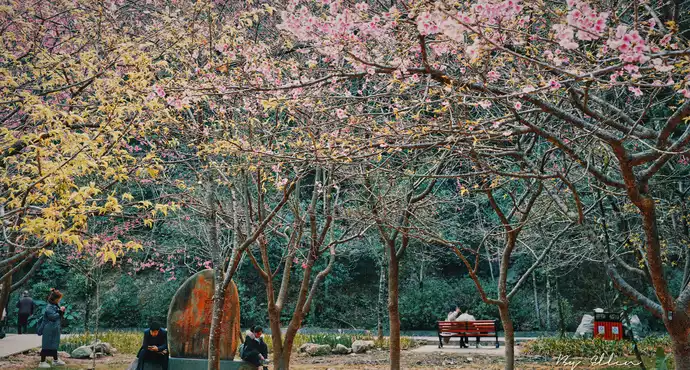
Fuzhou National Forest Park is home to rare plants under national first-class protection, including the "living fossil" Metasequoia glyptostroboides, whose leaves were once considered a global phenomenon, known for being worth five tons of steel, and Davidia involucrata, also known as the "Chinese Dove Tree." Warm in winter and cool in summer, the forest releases abundant oxygen and negative oxygen ions, attracting numerous residents to enjoy a "forest bathing" experience. It has earned the nickname "Fuzhou's largest natural oxygen bar."
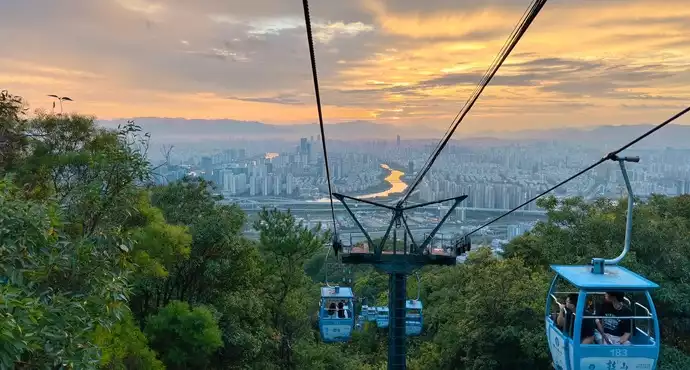
The Gushan Scenic Area, centered around the ancient Yongquan Temple, boasts over 20 scenic spots in the east, including Huilong Pavilion and Lingyuan Cave; dozens of caves and ravines in the west, with the Eighteen Scenic Spots being particularly notable; over 50 scenic spots in the south, including Luohan Terrace and Xianglu Peak; and 45 scenic spots in the north, including Dading Peak and Baiyun Cave. Furthermore, numerous cliff inscriptions by famous figures throughout history are also found. The waterfalls have now become a major attraction of Gushan, allowing visitors to enjoy the roaring cascades without having to wait for the rainy season.
Qingyun Mountain, encompassing over 50 square kilometers, boasts nine peaks exceeding 1,000 meters and nine streams flowing through its canyons. The scenic area is divided into five main sections: the flagship Qinglong Waterfall Scenic Area; the Yuntian Stone Corridor Scenic Area, home to Zhuangyuan Peak, Qingyun Mountain's main peak, and Fujian's highest stone corridor; the Baima Canyon Waterfall Scenic Area, Southeast Asia's largest canyon; the Jiutian Waterfall Water Curtain Palace Scenic Area, Asia's longest stepped waterfall; and the Alsophila Spinosa Valley Scenic Area, Fujian's premier pristine botanical garden.
Wushan, also known as Daoshan, stands opposite Yushan at an elevation of 84 meters. With its towering trees and tranquil scenery, it has been a popular tourist destination since the Tang Dynasty. Over 200 cliff carvings remain on the mountain, showcasing exquisite seal, clerical, regular, running, and cursive scripts. Among them, the seal script of Tang Dynasty calligrapher Li Yangbing is considered a masterpiece.
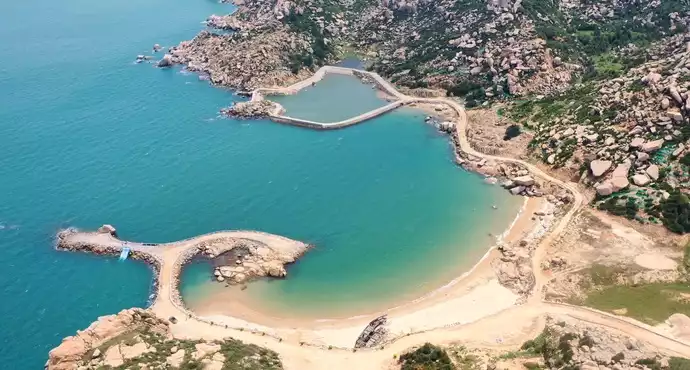
From afar, the sea and sky merge into one, seagulls fly back and forth, sails dot the sky, and fishermen sing songs. From close up, you can see the roaring white waves and the soft sand - this is Pingtan, the mainland island closest to Taiwan.
At the mouth of the Minjiang River, five massive reefs resemble five tigers crouching in the turbulent waters. Standing side by side, they face the vast ocean. This is the famous "Five Tigers Guarding the Gate." The five reefs are connected at their bases, with the third tiger in the middle looking back toward the Tiger Cave on Qingzhi Mountain, like a figure yearning for its nest. This is known as the "Turning Tiger." To view the Five Tiger Reefs, find the right angle. From about 150 meters from the side, the reefs become more and more like a striking sight.
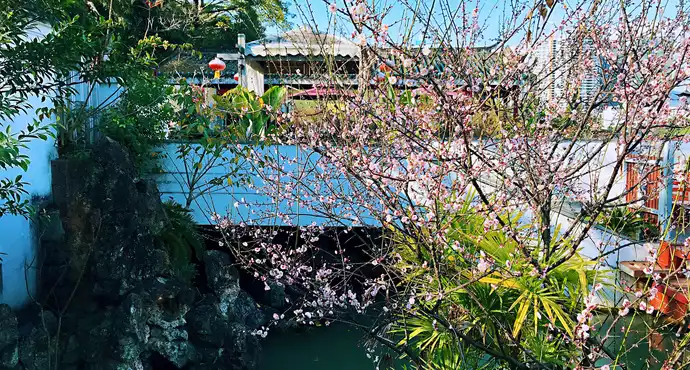
West Lake Park is Fuzhou's best-preserved classical garden. Utilizing natural landscapes and featuring native tree species, the garden emphasizes poetic and picturesque beauty, capturing the larger picture within the smaller, enhancing the beauty of West Lake. Every Dragon Boat Festival, dragon boat races are held at West Lake in Fuzhou. The spectacular spectacle unfolds across the vast expanse of water, while the resounding sounds of gongs and drums resonate through the heavens. West Lake Park also houses the Fujian Provincial Museum and the Food Exhibition Hall.
The overall design of Zuohai Park is based on the theme of "Scenery of the Five Continents". In the center of the main entrance square there is a female sculpture symbolizing the five continents of the world. There are many trees with southern characteristics in the park. The most distinctive large underwater world on the southeast coast is also in this park.
Located on Jiangbin Avenue, Jiangbin Park comprises seven scenic areas: from west to east, they are Xihe Garden, Jinjiang Garden, Jinsha Garden, Wanglong Garden, Colorful Garden, Fujian Style Garden, and Minshui Garden. Although small, Jiangbin Park possesses a distinct subtropical character. The prevalence of Araucaria and Areca palm trees throughout the park enhances its charm. On summer evenings, it's a great place to relax and stroll.
The Jinniu Mountain Park gate tower stands majestically on the north side of Yangqiao West Road, resembling a giant white bat spreading its wings, ready to take flight. Before the park lies the mighty Xihe River, a tributary of the Minjiang River known as the "North Port." The park's musical fountain and water-screen movies are shown at 8:00 p.m. on Tuesdays, Thursdays, Fridays, Saturdays, and Sundays. They also run every evening on holidays, including Spring Festival, May Day, and National Day, and are always packed.
The Hot Spring Park is a European-style leisure park. Centered around a glass pyramid, it is divided into two major sections: the north and south. The north section features artificial landscapes, while the south emulates the natural beauty of lakes and mountains, featuring mountains, lakes, islands, lush trees, birdsong, and fragrant flowers. Every Spring Festival, the park hosts a large tulip exhibition.
Kaiyuan Temple is one of the oldest existing Buddhist temples in Fuzhou. There are many precious cultural relics in the temple. The "Kaiyuan Temple" plaque at the entrance of the temple is said to be written by Ouyang Xun, a great calligrapher in the Tang Dynasty. In the Iron Buddha Hall of Kaiyuan Temple, there is a 100,000-jin iron cast seated statue of "Amitabha Buddha". The statue has a spiral bun and an open chest, ears hanging down to the shoulders, and sits on a lotus platform with folded hands. The solemn and dignified appearance reflects the style of the Tang Dynasty.
Hualin Temple, hailed as a national treasure and a key national cultural relic protection site, boasts a history of over 1,000 years. Its construction techniques are unique among Tang and Song Dynasty wooden structures throughout China, significantly influencing the "Daibutsu-style" and "Tensei-style" architectural styles of Japan's Kamakura period. The main hall's main components are still millennia-old originals, making it the oldest wooden structure south of the Yangtze River in China.
Jinshan Temple sits atop a small rocky mound in the middle of the Wulong River. Because it resembles Jinshan Mountain in Zhenjiang, Jiangnan, it's known as "Little Jinshan." Today, the eight scenic spots of Jinshan Temple can still be found here: "Hongtang Ancient Ferry," "Autumn Mists over Shicang," "Miaogao Bell," "Fishing Lights on Half Island," "Yuncheng Stone Pagoda," "Sails on Bashan Mountain," "Night Moon Over the Peaks," and "Sunset at Qilu." Looking out from the railings of Jinshan Temple, you can see rippling blue waves and floating sails.
The Mawei Shipyard at Mawei Harbor is the largest shipbuilding base in Fujian Province. The thousand-year-old Luoxing Pagoda, towering over the riverbank, is a landmark gateway to the Minjiang River. Ten kilometers southeast lies the Jingangtui Scenic Area, one of the Seven Scenic Spots of the Minjiang River. Climbing to the top of the pagoda offers panoramic views of the port, docks, and development zones. Ancient artillery forts flank the riverbank, offering views of the battlefields of the Sino-French War. Visitors can also pay tribute to the martyrs who sacrificed their lives for their country at the Zhaozhong Shrine.
Luoxing Tower is an internationally recognized navigational beacon and a landmark of the Minjiang River, earning it the nickname "China Tower." At its base is Luoxing Park, adjacent to the International Seamen's Club. At the top of the tower is a large sphere nearly 2.3 meters in diameter. Visitors can climb to the base of the sphere and gaze out over the harbor, docks, and development zones.
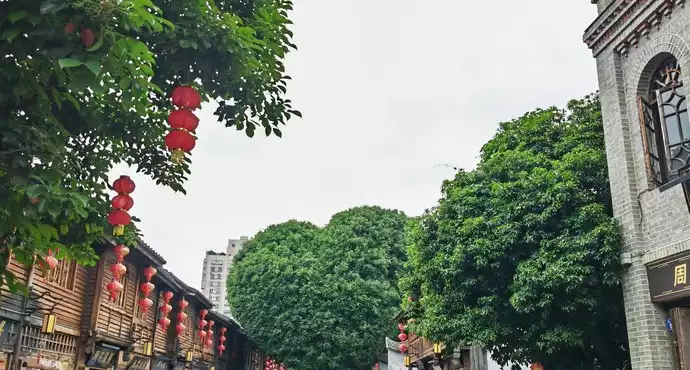
Located in the heart of Fuzhou, "Three Lanes and Seven Alleys" is a collective term for the ten alleys arranged from north to south on both sides of Nanhou Street. Within this neighborhood, the alleys are crisscrossed and paved with stone slabs. Many of the residential buildings feature intricately carved doors and windows with mortise and tenon joints. Richly patterned carvings, exquisite doorframes, flower stands, and pillars are found throughout, showcasing the craftsmanship and unique character of Fuzhou's ancient residential buildings. The area has been hailed by architectural circles as a vast "Museum of Ming and Qing Dynasty Architecture."
Zhuzifang Street District
Historically, the Zhuzifang neighborhood was a hub of numerous academies and students. By the late Qing Dynasty, it housed three Confucian temples, two county government offices, and a prefectural academy. The names of the lanes and alleys within the neighborhood, all evocative of Confucianism, include Guanglufang, Wenrufang, Yijinfang, Huangxiang, Jipixiang, Langguanxiang, Anminxiang, Gongxiang, Taxiang, and Yangqiaoxiang.
May Day Square is Fuzhou's political and cultural center and a vital spot for residents to relax and cool off. It's also the location for the annual New Year's Day and National Day flag-raising ceremonies. The square exudes a strong political and cultural atmosphere. A musical fountain stands in its center, and within the pool are eight 5-meter-tall white sculptures of dancing girls, symbolizing the joyful lives of the "daughters of Fujian" living in the land of Fujian. To the south of the musical fountain stands a large stainless steel sculpture depicting the Fuzhou city emblem, "Three Mountains and One River" (symbolizing Yushan, Wushan, Pingshan, and the Minjiang River).
The Min River, the largest river in Fujian Province, is a major scenic waterway in Fuzhou. Its banks are adorned with breathtakingly green mountains, creating a picturesque scene. Its 50-kilometer route through Fuzhou offers numerous scenic attractions, including Jinshan Temple, the Diamond Leg, the Five Tiger Gate, and the world-renowned Mawei Harbor. Among the bridges it traverses, the Jiefang Bridge and the Sanxianzhou Bridge are particularly noteworthy.
Originally a shrine dedicated to Lin Zexu, it features numerous stone carvings and statues, and boasts simple architecture. Within the shrine lies a square pavilion housing three bluestone steles: an imperial edict, an imperially bestowed eulogy, and an imperially bestowed inscription. All were bestowed upon Lin Zexu by the emperor upon his death and inscribed upon the construction of the shrine. Visitors can admire authentic scenes such as the Nanhou Street villagers welcoming Lin Zexu home and his exile at the Karez in Xinjiang, as well as authentic artwork, including Lin Zexu's handwritten calligraphy, paintings, letters, and memorials.
The Fujian Museum houses over 50,000 cultural relics and specimens, including a gilt-bronze lion incense burner made by Yanhan, King of Fujian during the Five Dynasties period (1644-1844), a "rabbit-hair cup" from the Jian Kiln of the Song Dynasty, silk garments unearthed from the tomb of Huang Sheng of the Southern Song Dynasty, and the iron mace of Li Gang, a renowned general who fought against the Jin Dynasty. The museum also features three major exhibitions: "Ancient Historical Relics of Fujian Province," "Fujian Revolutionary History," and "Fujian's Rich Mountains and Seas."