
lava viewing
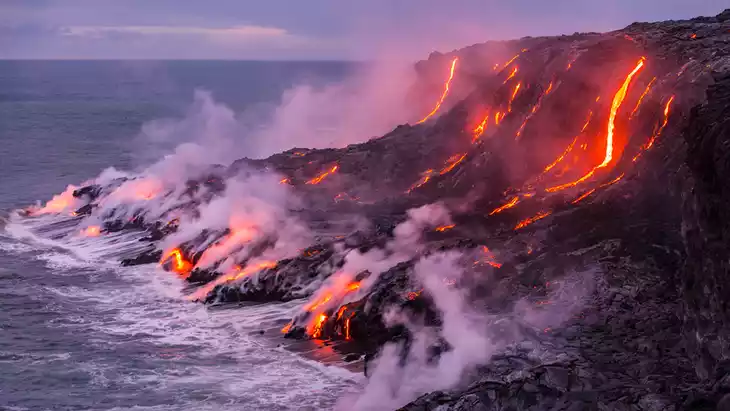
We are going to the Big Island for several days this month just to see live lava. Which is our best chance...hire a car and take a walking tour into the crater or go on a bus tour?
It’s a great and important question — whether you should hire a car and attempt to see lava on your own, or join a bus/tour — when visiting Hawaiʻi Volcanoes National Park (HVNP) on the Big Island to try to catch lava viewing. The “best” option depends a bit on luck (lava visibility), what you want from the experience, and how comfortable you feel with driving and hiking in volcanic terrain. Here’s a detailed breakdown of pros and cons to help you decide — and some recommendations for maximizing your chances of success.
First — Reality about lava viewing at HVNP
Because eruptions are intermittent, there is no guarantee that you’ll see active molten lava — even if lava was flowing a few days before or after. The park’s own guidance notes that eruptions are “episodic, with eruptions separated by pauses lasting several days or more.”
When lava *is* active, there are several official overlooks and vantage points along Crater Rim Drive (and related roads) from which you can safely view glow, fountains, or flows — without needing to hike into dangerous or closed-off areas. On many such occasions, reaching the viewing point may just involve parking and a short walk — rather than a strenuous long hike or dangerous off-trail scrambling.
However, conditions (gas, fog, crowding, closures) change — some areas may be closed or unsafe. Also, if lava flows are on remote or private land (or in restricted zones), access may be completely off-limits — then no tour or car will give you a good viewing.
Even when lava is not visible, HVNP has many other remarkable features (lava tubes, old lava fields, crater rims, rainforest hikes, petroglyphs, volcanic landscapes) — so the trip will still be worthwhile.
With that said, here are pros and cons of the two main approaches you’re considering:
- Driving and exploring on your own (hire a car + self-guided walk or drive):
- ✅ Gives you maximum flexibility and freedom: you control your schedule, when you arrive (day or night), how long you stay, and which vantage points or hikes you try.
- ✅ If lava is active and an overlook is accessible, you might grab a close, uncrowded, spontaneous viewing without waiting for a tour group. For example, many suggest arriving early morning or after dark for potentially better views and fewer crowds.
- ✅ You can combine lava viewing with other park highlights (hikes, lava tubes, rainforest, crater rims) in one full-day (or multi-day) visit.
- ⚠️ Requires up-to-date info on volcanic activity, access restrictions, and air quality (vog / sulfur gases).
- ⚠️ Even “easy” sightlines may require a short walk on uneven terrain (especially if parking lots are full, forcing parking along Crater Rim Drive), or walking on lava-rock surfaces in some cases — so sturdy shoes, flashlight (if after dark), water and care are needed.
- ⚠️ No guarantee of seeing lava — even on a “lucky” day, lava may be invisible from overlooks due to cloud cover, volcanic gas, or simply because the eruption paused.
- Joining a bus or guided lava-tour:
- ✅ Tours often have the most up-to-date information about where lava is visible, and have permission/access to the safest (or best) viewing spots — including potentially temporary or restricted areas.
- ✅ For visitors unfamiliar with Big Island roads or volcanic terrain (or if you prefer not to drive at night or in uncertain conditions), a guided tour reduces stress — you don’t need to worry about navigation, parking, or safety assessments.
- ✅ Drivers/guides often supply key gear or at least give guidance about what to bring (flashlight, sturdy shoes, water, etc.), and may choose vantage points that are easier to access for groups.
- ⚠️ Tour cost — costs may be significantly higher than just paying park entrance + gas + picnic lunch.
- ⚠️ Less flexibility — you’re on the tour’s schedule. If lava becomes visible outside of tour times (e.g. very early morning before the tour, or late at night after the tour ends), you may miss it.
- ⚠️ May involve hiking or walking over rough terrain depending on where the lava flow is — you won’t always be “just a quick stroll from parking.” And even tours respect closures — if flows are deemed unsafe you may not get close.
My recommendation — and a hybrid approach many visitors find best
If I were you and my main goal was to maximize chances of seeing lava, I’d do this:
- Hire a car. That gives full control over when you go, whether you stay late, return early, and explore other parts of the park. For good “safe-overlook” lava viewing, you don’t need to commit to a long or difficult hike — just check current conditions and plan to use overlooks along Crater Rim Drive.
- Before you go, check the official resources: the park’s alert page for HVNP and the latest from U.S. Geological Survey (USGS) Hawaiian Volcano Observatory — there may be updates on eruptions, road closures, or hazardous gas levels. If volcanic gases (vog) or sulfur dioxide are high, consider skipping or limiting time outdoors for safety, especially if you or someone in your group has respiratory issues.
- Visit the park as early as possible (or be prepared to stay after dark if lava viewing is best at night), park at recommended overlooks (for example the parking at Devastation Trailhead or other official lots), and plan for only a short walk to the viewpoints. Bring a flashlight, sturdy shoes, water, and warm clothes for night. Many lava-viewing spots get very dark after sunset.
- If you prefer less stress and like the idea of someone else handling logistics, or if you don’t want to drive after dark or deal with volcanic-gas uncertainty, then a guided lava tour is a solid backup — just be aware that there’s still no guarantee of seeing active lava, and the cost is higher.
- Because lava activity is unpredictable — try to allow more than just one night in or near the park. Multiple attempts increase your odds of catching lava when it’s active. Even if lava isn’t visible, the rest of the park (craters, lava tubes, hikes, rainforest, dramatic landscapes) still makes it a memorable experience.
Summary — What I believe is your best chance
Hiring a car and going on your own gives you the best flexibility to catch lava when and if it’s active, and allows you to enjoy the rest of the park at your own pace. A guided tour is more convenient and safer in some respects — especially if you prefer not to drive at night or want someone else managing logistics — but gives less flexibility and still doesn’t guarantee success. Because eruptions are unpredictable, realistically your best “strategy” is to plan for more than one attempt during your visit, stay flexible, and monitor conditions carefully. With that approach, you give yourself the highest odds of seeing that amazing molten lava glow.
More Hawaii Volcanoes National Park Travel Questions
The attractions mentioned in this question
Popular Destinations

Popular Travel Questions
- Pickleball Resorts
- Airport shuttle Boston to Martha’s Vineyard
- College Park Station parking question
- Looking for a Business Center in Harrah's or Harvey's
- Streaming Services
- SW Colorado Drive Itinerary help
- Venice Valentine's Day
- HNL to Marriott Ko'Olina beach club by bus
- Military Week- avoid 29 Palms?
- Datong Airport to City Late at Night
- Vacation rentals
- Mexican Restaurant