
one day at VNP?
so i have been reading a lot - just to put that out there. My husband and I are coming with our 3 kids- 14, 10 and 5. Schedule that cannot change- land in Kona sunday 2 PM and leave Kona at 9:40 PM the following sunday. Hotel that is already booked (based on our available time share: Club Wyndham Kona Hawaiian Resort.
Question 1: we are devoting a whole day to VNP however I thought i read that we could add akaka and rainbow falls to that day too? woudn't that be too much? we also want to go star gazing at mauna kea?
Questions 2: Visiting VNP- we want to do some easy, not long hikes, due to having young children. any specific recommendation? places we def wants to see- lava thurston tube, the petroglyphs, devastation trail or kilauea ike - which is more interesting for kids to really see? and the chain of craters. should we also do crater rim? the steam vents - safe for kids? Kilauea caldera - air safety due to recent volcanic action?
does any of this make sense? (planning to leave Kona around 7 AM. around what time can star gazing be done? or do it elsewhere?)
Spending one full day at Hawai‘i Volcanoes National Park (VNP) with young children is definitely doable, but adding Akaka Falls and Rainbow Falls on the same day will make it very rushed. The drive from Kona to VNP is about 2–2.5 hours one way, and adding the north-east side waterfalls will extend your driving considerably. If your goal is to maximize time at the park and enjoy stargazing at Mauna Kea, it’s better to focus the day on VNP itself and leave waterfall visits for another morning if possible.
For easy hikes with kids, there are several options suitable for all ages:
- Thurston Lava Tube (Nāhuku): A short, paved loop through a lava tube—kids usually love exploring the tunnel and it’s stroller-friendly.
- Devastation Trail: About a 1-mile round-trip on a paved trail through a lava flow from 1959—educational and easy for kids.
- Kīlauea Iki Trail (short section): The full trail is longer, but walking part of it to the overlook is enough for kids to see the crater floor without overexertion.
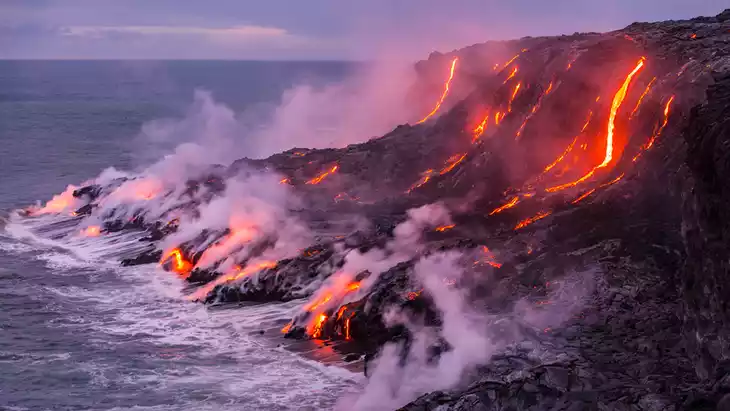
- Chain of Craters Road: Drive down to see lava flows, petroglyphs, and old lava fields—kids enjoy spotting the lava and coastal views. Walking sections along the road are also manageable.
- Crater Rim Drive: Offers several lookouts; you can drive and stop for short walks to viewpoints without hiking long distances.
Steam vents are generally safe for kids if you stay on marked paths and don’t get too close. Current air quality near Kīlauea Caldera can vary; it’s important to check the Hawai‘i Volcanoes National Park website or local air quality alerts on the day of your visit. People with respiratory issues, and very young children, may want to limit time near areas with volcanic gases.
For stargazing at Mauna Kea:
- Evening tours typically depart from Hilo or Kona around 2–3 hours before sunset to allow time to reach the summit. Official guided tours handle the timing, transportation, and altitude safety for kids.
- Self-driving families can watch stars from the Mauna Kea Visitor Information Station at 9,200 ft, which is open for evening programs and safer for children than the summit.
- Best stargazing time is after astronomical twilight, roughly 45–60 minutes after sunset.
Suggested plan:
- Leave Kona early (~7 AM), drive to VNP.
- Focus on Thurston Lava Tube, Devastation Trail, short Kīlauea Iki viewpoint, and a drive down Chain of Craters Road.
- Take short stops at lookouts on Crater Rim Drive if time permits.
- Return toward Hilo side in late afternoon, have an early dinner, and then head to Mauna Kea Visitor Station or a guided tour for stargazing.
Trying to include Akaka and Rainbow Falls in the same day as VNP and Mauna Kea would be very rushed and limit your enjoyment of each site. It’s better to focus one day on VNP and Mauna Kea, and if possible, dedicate another short day for waterfalls and coastal sights.
More Island of Hawaii Travel Questions
- Early morning travel for flight
- 5 Day Big Island Circle Itinerary
- Help with itinerary- both sides of island?
- Retriever's Live-ish TR BI/Kauai 2/14-3/6
- Is Kilauea still erupting?
- Coffee Tasting in Hilo
- Driving after dark from Maunakea to Volcano
- Manta Ray Tours
- Massages
- Boogie boarding for kids (now in August)
- Itinerary sanity check and suggestions
The attractions mentioned in this question
Popular Destinations

Popular Travel Questions
- First time; Solo travel in October
- Taxi or Didi rides in Jiangmen, Guangzhou
- What to do in Wuhan in an emergency
- 30A/Florida Panhandle or Clearwater/St. Pete's Beach
- Any interesting lunch places in San Bernardino?
- Possibility of sleeping in King Salmon airport?
- Chongqing and Chengdu with Jiuzhaigou
- Half Moon Bay or Carmel?
- Yichang to Zhangjiajie transfer
- Multiday charter in November
- SoCal road trip with 2 kids for Xmas/NYE
- Bad experience at North Shore